Why a Family Monitored Alarm Makes Sense for Senior Safety
When Independence Meets Peace of Mind
For many older adults, staying in their own home as they age is a priority. It is familiar, comfortable, and tied to decades of memories. But living alone also brings valid concerns about what happens in an emergency. A fall, a sudden illness, or even getting stuck in the bathroom can turn a normal day into a crisis. Traditional medical alert systems have been around for years, but they often work in a vacuum: the alert goes to a call centre, and that is where the responsibility ends. Families are left out of the loop until someone calls them.
A family monitored alarm changes that dynamic. Instead of handing over all decision-making to a remote operator, it keeps the people who care most, your family, directly involved. They get notified, they can listen in, and they can decide what happens next. That shift from a closed system to an open, family-inclusive model is a significant upgrade in how we think about senior safety at home.
How a Family Monitored Alarm Differs from a Standard Medical Alert
A traditional medical alarm works like this: you press a pendant or pull a cord, and a call centre operator answers. They assess the situation, then decide whether to call a family member, an ambulance, or both. It is a linear process, and it works well enough in straightforward cases. But the operator does not know your mother's medical history, your father's daily routines, or the fact that your aunt prefers to be taken to a specific hospital across town. Those details matter in a crisis.
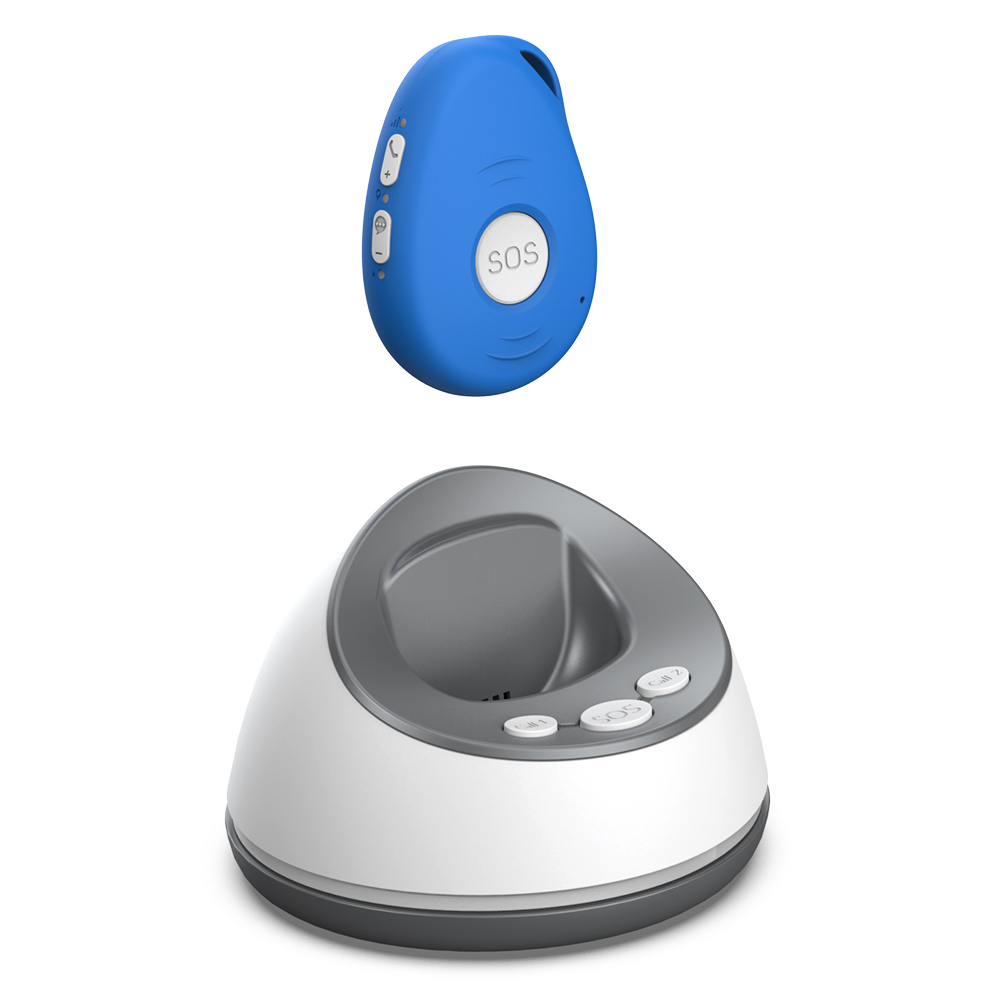
A family monitored alarm, on the other hand, brings your family into the conversation from the start. When the alarm is triggered, the system contacts a designated family member or caregiver directly. That person can speak through the two-way speaker built into the base unit, assess the situation, and decide the best course of action. They might call a neighbour first, or drive over themselves, or decide that an ambulance is unnecessary because they can handle it. The call centre is still there as a backup, but the family member is the primary responder.
This shift is not just about convenience. It is about preserving the senior's autonomy and dignity. When a family member responds instead of a stranger, the conversation is more personal. The senior is less likely to feel like a case number. They are talking to someone they trust, and that makes a difference in how they experience the emergency.

Real-Life Scenarios Where a Family Monitored Alarm Shines
Imagine an older man who lives alone and has a minor slip in the kitchen. He is not seriously hurt, but he cannot get up easily. With a traditional alarm, pressing the button would bring a call centre operator who would likely dispatch an ambulance. The man ends up in the emergency department for a non-emergency, spending hours there and feeling embarrassed. With a family monitored alarm, his daughter receives the alert. She can talk to him through the speaker, see that he is stable, and call a neighbour to help him up. No ambulance, no hospital visit, no lost afternoon. The system gave her the context to make a better call.
Or consider a senior with dementia who wanders outside at night. A standard alarm relies on the person pressing a button, which may not happen. But a modern family monitored alarm that includes GPS tracking can alert a family member automatically if the person leaves a defined safe zone. The family can then locate them quickly, before they wander too far. That kind of proactive monitoring is not something a call centre can offer on its own.
What to Look for in a Family Monitored System
Not every medical alarm that claims to involve family does it well. Here are the features that actually matter when you evaluate a system for your own parent or relative:
- Two-way voice communication: the family member should be able to speak directly through the base unit, not just receive a notification. Hearing the person's voice tells you a lot about their condition.
- Automatic fall detection: many seniors hesitate to press a button because they do not want to bother anyone. A fall sensor that triggers automatically removes that hesitation.
- GPS capability: if the senior is active and goes out to the garden, the shops, or a friend's house, GPS ensures you can find them if they do not come home when expected.
- Customisable contact lists: you should be able to set up a hierarchy of who gets notified first, second, and third. Not every family member needs to be called at 3 a.m.
- Battery backup and cellular connectivity: the system must work during a power outage and not depend on the home Wi-Fi, which can go down.
The Balance Between Privacy and Safety
One concern that often comes up with a family monitored alarm is privacy. Some seniors feel that having a family member listen in on their daily life is intrusive. That is a fair point, and it should be discussed openly before installing any system. The key is to set boundaries. Many systems allow the senior to decide when the microphone is active. The alarm is not always on; it only activates when the button is pressed or a fall is detected. That distinction matters. The senior retains control over their space, but help is available the moment they ask for it.

Another angle is the family member's own comfort level. Not everyone wants to be the first responder. Some people find hearing a parent in distress too stressful, or they may not live close enough to act quickly. In those cases, the system can be configured to notify the call centre first, with the family member copied as a secondary contact. The flexibility to adjust the response hierarchy is what makes these systems practical for a wide range of family dynamics.
Why This Matters More as We Age in Place
New Zealand's population is ageing, and the preference for ageing in place is strong. According to recent data, the vast majority of older New Zealanders want to stay in their own homes for as long as possible. That puts pressure on families to find reliable, responsive safety solutions. A pendant or wristband that simply calls a distant call centre is a start, but it does not fully address the emotional and practical needs of either the senior or their family.
Connect with us on YouTube.
A family monitored alarm fills that gap by creating a direct communication channel between the senior and the people who know them best. It is not about replacing professional medical help; it is about adding a layer of informed, personal judgment before that help is called. That extra step can reduce unnecessary hospital visits, lower anxiety for everyone involved, and make the senior feel more supported in their independence.
How to Start the Conversation with Your Parents
Bringing up the topic of medical alarms with a parent can be delicate. No one wants to admit they might need help. But framing it as a tool for your own peace of mind, rather than as a sign of their decline, often works better. You might say something like, "This would help me stop worrying so much when I am at work." That shifts the focus from their vulnerability to your reassurance, which is often easier for them to accept.
- Start small: suggest a trial period of a week or two. Many systems are easy to install and return if it does not work out.
- Let them choose: involve them in picking the device and setting up the contact list. When they have control over how it works, they are more likely to use it.
- Demonstrate the two-way feature: show them how they can talk to you through the speaker. Hearing your voice come through the unit makes it feel less like a machine and more like a connection.
- Address the cost openly: explain that the monthly fee is often less than a single day in hospital, and that many plans in New Zealand are comparable to a streaming subscription.
- Revisit the setup after a month: what works in theory may need adjustment in practice. Maybe the pendant is uncomfortable, or the GPS range needs tweaking. Be willing to adapt.
The Bottom Line on Keeping Seniors Safe at Home
There is no single device that eliminates all risk, but a family monitored alarm comes closer than most. It combines the reliability of a professional alert system with the personal touch of a family member who knows the senior's habits, health history, and preferences. That combination is hard to beat. The technology is mature enough now that it works reliably, and the costs have come down to a very reasonable level. For families in New Zealand looking for a practical way to support an ageing parent's wish to stay at home, it is worth a serious look.
Familyr provides personal medical alarms for seniors in New Zealand with SOS, GPS, fall detection, and family-monitored two-way calling, and is based at 14 Grand View Road, Remuera, Auckland 1050, New Zealand, reachable at +64 9 872 0345.